
When an ERP implementation goes well, it can seem fairly straightforward from the outside. The new system is configured, data is moved over, employees are trained, and the business goes live.
Behind that process, however, is a significant amount of planning, coordination, testing, and decision-making.
A successful ERP implementation is not simply a matter of installing software. The system needs to reflect how the business operates, support the people who will use it every day, and be ready to handle real-world processes from the start.
Here are some of the important pieces of an ERP implementation that customers may not always see.
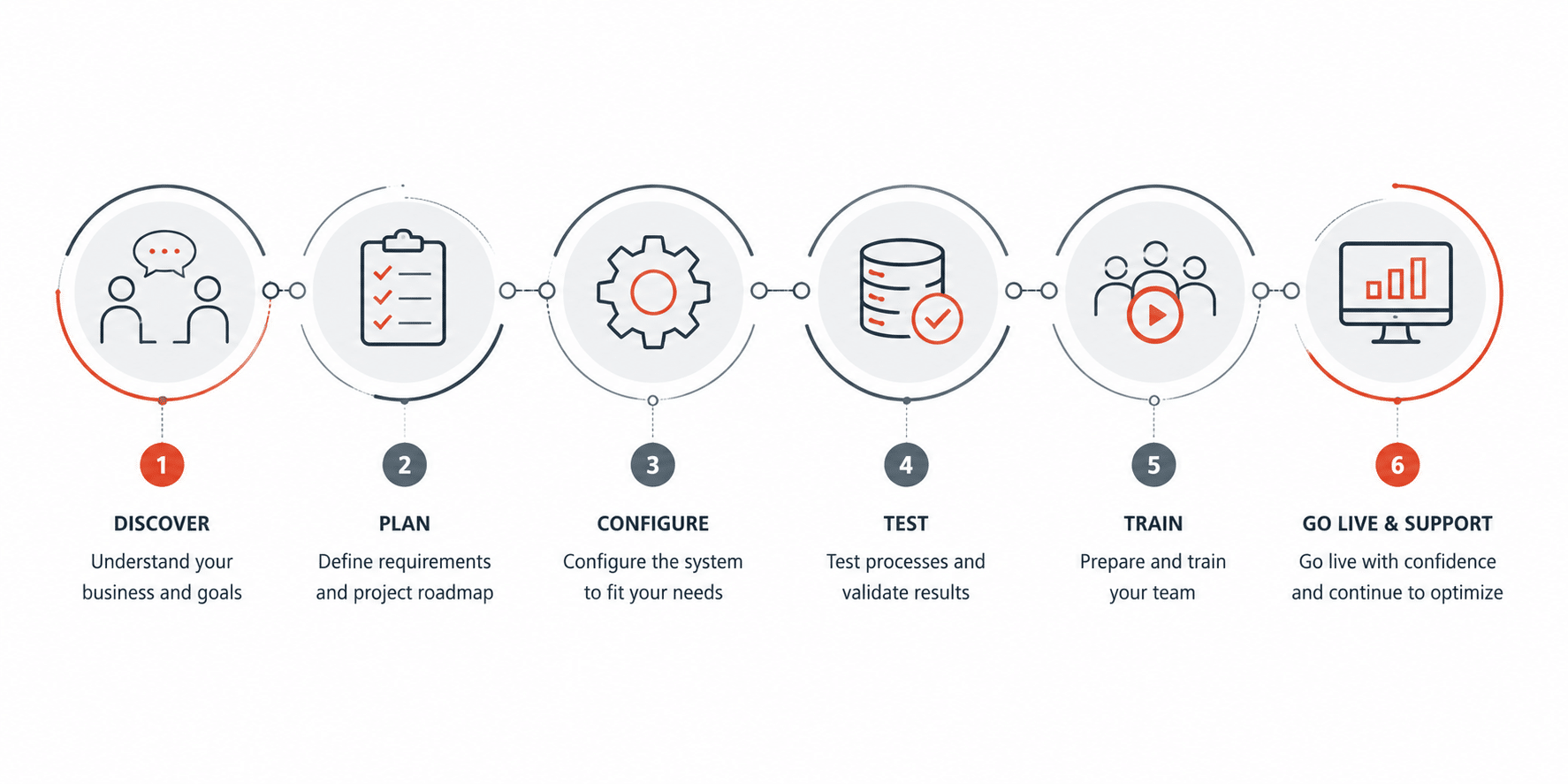
One of the most important parts of an ERP project happens before much configuration takes place.
The implementation team needs to understand how the business currently operates. How are orders processed? How does information move between departments? Where are approvals required? Which reports are important? What processes are creating extra work today?
These conversations help establish what the new ERP system actually needs to accomplish.
They can also uncover processes that have developed over time simply because the existing software required them. Recreating every old workaround in a new ERP can carry unnecessary complexity into the new system.
At ACC Software Solutions, discovery is an important part of the implementation process because it helps our team understand both the technology requirements and the business processes behind them.
Once the business requirements are understood, they need to be translated into decisions about how the ERP will be configured.
That can involve determining workflows, permissions, approval processes, reporting requirements, integrations, and other system settings.
Some decisions are relatively simple. Others require discussion about how different departments work together or how a process should function going forward.
This is where the experience of an implementation partner becomes especially valuable. The goal is not simply to make the software work. It is to configure it in a way that makes sense for the business using it.
Moving information from an existing system into a new ERP requires more than transferring files from one place to another.
Customer records, vendor information, inventory items, financial data, and other records may need to be reviewed before migration. Duplicate records, inconsistent naming, outdated information, or incomplete fields can create problems if they are carried directly into the new system.
There are also decisions to make about how much historical information needs to move into the new ERP and what can remain archived elsewhere.
Taking the time to address these questions before migration can make the transition much easier and give the new system a cleaner starting point.
Testing is another area where a great deal of important work happens behind the scenes.
It is not enough to confirm that individual features function correctly. The system needs to be tested against the way the business actually operates.
Can an order move through the complete process correctly? Do approvals reach the right people? Are reports producing the expected information? Are integrations exchanging data properly? Can users complete the tasks they will be responsible for after go-live?
Testing these scenarios gives the project team an opportunity to identify issues while there is still time to address them.
It also gives employees a chance to become familiar with the new environment before they are relying on it to complete their daily work.
Even a well-configured ERP will struggle if the people using it are not comfortable with the new system.
Training should help employees understand more than which buttons to click. Users need to understand how their responsibilities fit into the new processes and what may be changing from the way they worked previously.
Different employees may also need different levels of training. Someone working primarily with inventory will have very different needs from someone responsible for financial reporting.
Preparing users before go-live can reduce confusion and help the organization transition more comfortably to the new system.
An ERP implementation involves decisions and input from many people.
Business leaders, department managers, everyday users, IT resources, software vendors, integration providers, and the implementation team may all be involved at different stages.
Keeping those pieces coordinated is an important part of the project.
Questions need answers. Decisions need to be documented. Testing needs to stay on schedule. Issues need to be addressed before they affect later stages of the implementation.
Customers may not see every conversation or technical adjustment taking place, but that coordination plays a major role in keeping the project moving.
Going live is a major milestone, but it does not mean the work suddenly stops.
Once employees begin using the ERP in their normal day-to-day environment, new questions may arise. Users may need additional guidance, processes may need minor adjustments, and opportunities for further improvements can become clearer.
Ongoing support helps businesses continue getting value from the system as their needs change.
Over time, that can include additional training, new integrations, workflow adjustments, reporting changes, upgrades, or other improvements.
When an ERP implementation feels smooth, it is rarely because the project was simple.
It is usually because the right questions were asked early, potential problems were addressed before they became larger issues, the system was thoroughly tested, and the people involved knew what needed to happen next.
The ERP software itself is important, but so is the team responsible for helping you implement it.
ACC Software Solutions works with businesses throughout the ERP process, from initial planning and implementation through training, support, and ongoing optimization. As an Acumatica and Sage 100 partner, our team brings decades of ERP experience to each project while taking the time to understand how each customer operates.
If you’re considering a new ERP or planning changes to your current system, a conversation with an experienced ERP partner can help you understand what the process may look like for your business.
Have questions about an upcoming ERP project? Contact ACC Software Solutions to schedule a complimentary conversation with our team.
Contact ACC Software Solutions | Explore Our ERP Services
Solutions by Industry
What's New
Still Using QuickBooks? Here’s What Acumatica Can Do Differently
Read MoreSubmitted by Courtney Quinn on Mon, 10/19/26 - 13:27
Where Does Your Team Lose Time Without Realizing It?
Read MoreSubmitted by Courtney Quinn on Fri, 10/09/26 - 11:33
What Should Be Part of Your 2027 Technology Plan?
Read MoreSubmitted by Courtney Quinn on Fri, 09/25/26 - 10:39
Whatever Your ERP Needs, We Have the Solution!
Or call us for a free consultation 866-379-3799